
If you already track DGX Spark-class desktop AI systems or the growing pile of local LLM boxes, the useful question is narrow: what did Cixtech actually show, what SoC sits inside, and can an overseas buyer put one on a desk yet? The short answers from the company’s own CIIF write-up and Chinese press (East Money / 财联社 syndication, QQ / 快科技): a whole machine exists on the show floor; the silicon story is the in-house Cix P1; and there is still no public price or ship date.
This is also a step change from Cixtech’s July WAIC strategic messaging. At CIIF the company framed AGX Station as the first physical whole-machine + Agentic OS version of that earlier roadmap — not just a slide about a future desktop supercomputer.
What AGX Station is (company framing)
Cixtech calls AGX Station a desktop AI supercomputing center. Chassis size is claimed at only 150 × 150 × 60 mm — closer to a large NUC or mini-PC footprint than a tower. On the software side it ships with Agentic OS 2.0, which the company describes as closing a loop from local inference through Token metering / billing — a prepaid-local-tokens story rather than a pure open-source appliance pitch.
Inference claims attributed to the company and press:
- Native: 7B–35B model inference on the base box.
- Open expansion: compute elastic up to about 350 TOPS.
- Adaptation: “full adaptation” of 122B models claimed.
- Peak: claimed support for roughly 150B model deployment.
Treat every TOPS figure and large-model claim as vendor / press attribution. There are no independent third-party benchmarks in the materials we used for this piece, and “adapted” is not the same as “comfortably serves your production agent stack.”
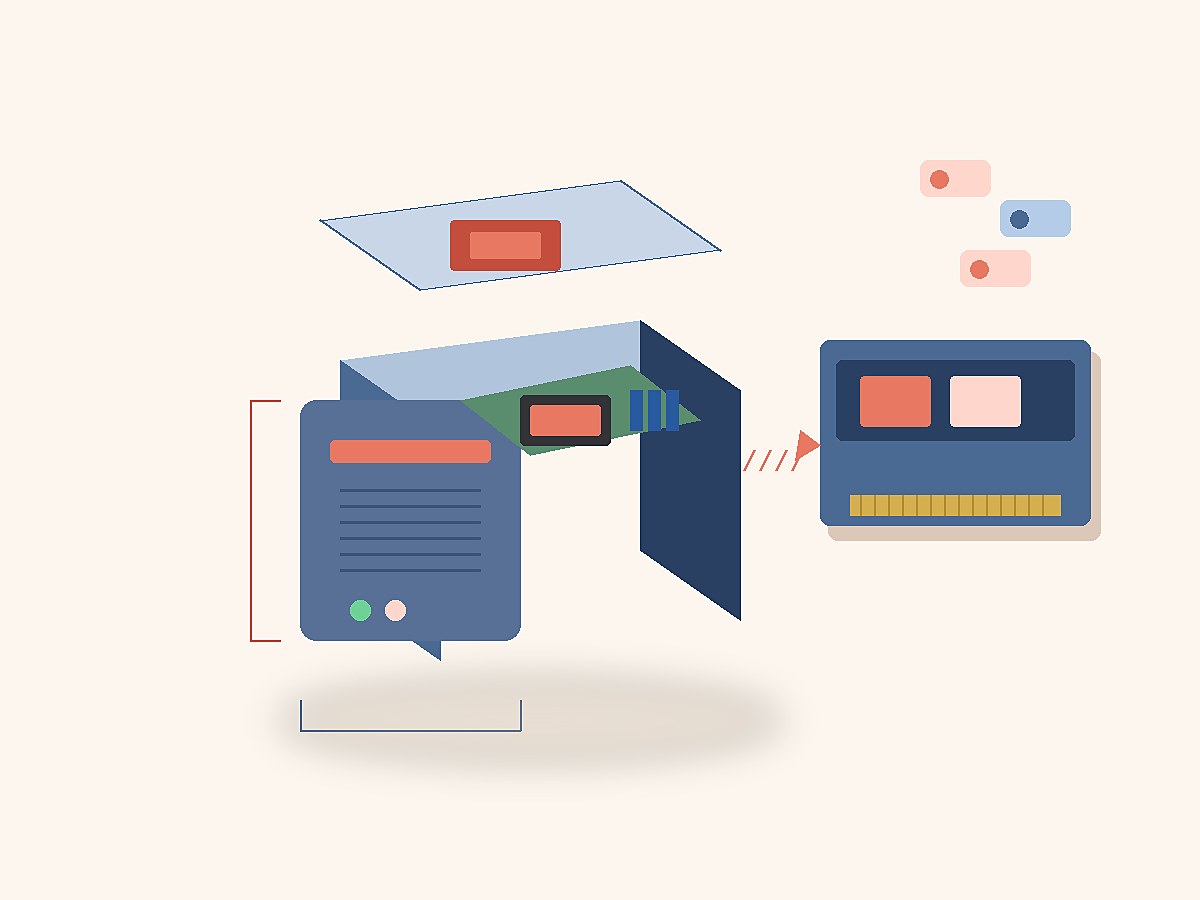
Illustration: compact chassis with SoC + expansion-slot metaphor — coral accents on a warm cream ground, distinct from the desk hero.
Inside: Cix P1 SoC
The compute base is Cixtech’s self-designed Cix P1 (此芯P1):
- Process / ISA: 6 nm, Armv9.2.
- CPU: 12-core.
- NPU: 30–45 TOPS (company range).
- GPU: 10-core.
- Extras: SVE2 vector path for model work; TrustZone and Secure EL2 for industrial/security framing; 16-lane PCIe 4.0 for expansion.
That PCIe width is part of how the company justifies the “desktop DGX-adjacent” pitch: the small box is supposed to stay small while external cards push the TOPS number toward the ~350 figure above. Sibling and edge SKUs shown alongside fill out the ladder:
- AGX Workstation — also 7B–35B native, with external accelerator-card expansion.
- P1 Mini host — M.2 / MXM / PCIe card options at claimed 45T / 70T / 160T tiers; local 27B / 35B deployment called out in company materials.
Not as a normal overseas retail SKU — at least not from anything announced at CIIF. Price and on-sale date were not published. Expect China-centric supply and partner channels first (industrial OEMs, education, on-prem agent demos). If you evaluate DGX Spark or other desktop local-LLM boxes today, treat AGX Station as a competitive signal and a SoC roadmap marker, not a drop-in purchase. Agentic OS 2.0’s token-billing closed loop also means the software story may be more appliance/ISV than “flash a USB and run llama.cpp.”
What else was on the booth (context, not the lead)
Cixtech’s CIIF page leans hard into an industrial “chip–edge–system” stack: partners and solutions spanning OT edge control, EtherCAT (e.g. iFA-EC), vision inspection with MVTec, and assorted edge hosts. That industrial matrix matters for Cixtech’s China go-to-market; it is background for readers who mainly care about the desktop AGX Station vs DGX Spark framing.
Separate QQ / 快科技 coverage also mentioned an AGX Box path running Android 17 with multi-agent demos (Kimi + WorkBuddy). Useful as a sidebar on how Cixtech is demoing agents on its silicon — not the lead product in the DGX Spark comparison.
Honest caveats
Three things to keep fixed when you file this next to a DGX Spark spreadsheet:
- No price, no ship date — show-floor machine ≠ buyable SKU.
- Vendor TOPS and model-size claims — 30–45 NPU TOPS, ~350 expanded, 122B “adapted,” ~150B “peak” are company/press numbers, not audited benches.
- China-first channels — industrial partners and domestic exhibitions are the current distribution story; international buy pages were not part of the announcement package we reviewed.
For overseas engineers, the near-term value is comparative: another Armv9.2 desktop form-factor with an explicit DGX Spark positioning and an OS that wants to meter local tokens. The near-term action is watch for a price list, an export SKU, or a partner who will actually ship a unit — not assume you can order one this week.